News BriefPolitics
South Korea’s 2026 local election count wraps up with high turnout
000Jun 30, 2026
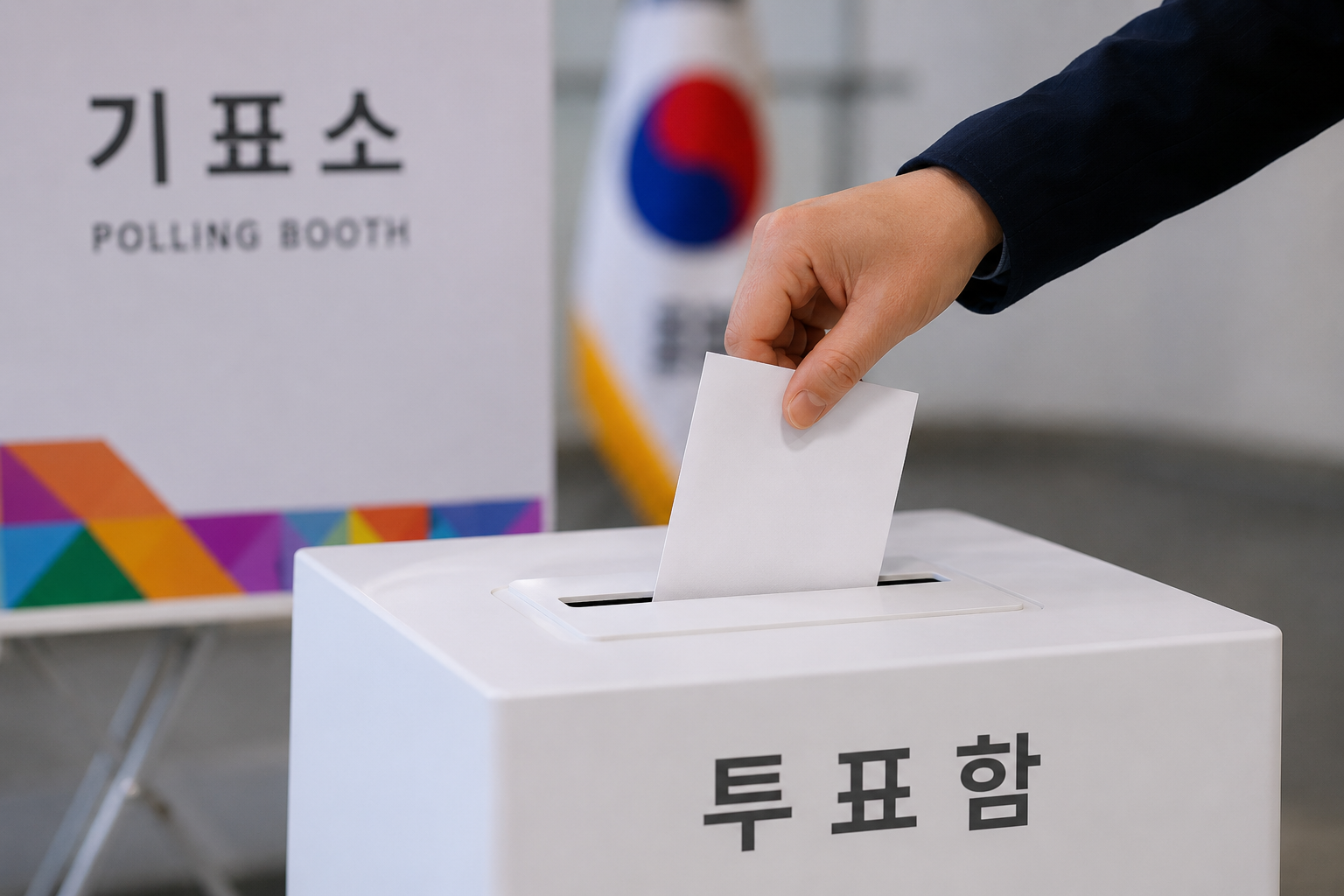
South Korea’s 2026 nationwide local election count has been completed, with turnout reaching 61.0%, the highest level since the country’s first local elections in 1994. The results showed gains for the Democratic Party in major regional races, while the People Power Party secured several wins as well.
- Why it matters
- South Korea’s 2026 nationwide local election count has been completed, with turnout reaching 61.0%, the highest level since the country’s first local elections in 1994. The results showed gains for the Democratic Party in major regional races, while the People Power Party secured several wins as well.
- Good to know
- South Korea’s 2026 nationwide local election count has been completed, with turnout reaching 61.0%, the highest level since the country’s first local elections in 1994. The results showed gains for the Democratic Party in major regional races, while the People Power Party secured several wins as well.
South Korea has finished counting ballots for the 2026 nationwide local elections and related by-elections, closing a closely watched vote that drew unusually strong public participation. According to the National Election Commission, the final provisional turnout reached 61.0%, the highest since the country’s first local elections in 1994.
The results point to a mixed political picture across the country. In the races for metropolitan and provincial governors, the Democratic Party won 12 areas, while the People Power Party won 4. In the 227 local district head contests, the Democratic Party led with 119 victories, followed by the People Power Party with 95. Independent candidates won 11 races, and the Rebuilding Korea Party secured 2.
The by-elections for National Assembly seats also added to the broader political significance of the vote. The Democratic Party won 9 seats, the People Power Party took 4, and one independent candidate was elected. Together, these results will likely shape how both major parties read the public mood in the months ahead.
High turnout is often seen as a sign that voters viewed this election as more than a routine local contest. Local elections in Korea can serve as an early test of national political sentiment, especially when they coincide with broader debates over governance, public services and party leadership. This year’s participation level suggests that many voters were motivated to weigh in on those issues.
For international readers, the election also highlights how Korea’s local political map can differ from national headlines. While national parties dominate the conversation, local races often reflect regional priorities, candidate reputation and practical concerns such as transportation, housing, education and municipal management. That makes the final count useful not only as a political scorecard, but also as a snapshot of what voters are paying attention to on the ground.
The National Election Commission’s results page remains the best place to check the latest confirmed figures and local breakdowns. As with any election count, final interpretations may continue to evolve as parties and analysts assess the outcome in detail.